Position Sizing in Trading: Calculate Risk Before a Trade
Calculate position size from a cash-risk budget and exit distance, verify contract units and currency conversion, and account for costs and rounding.
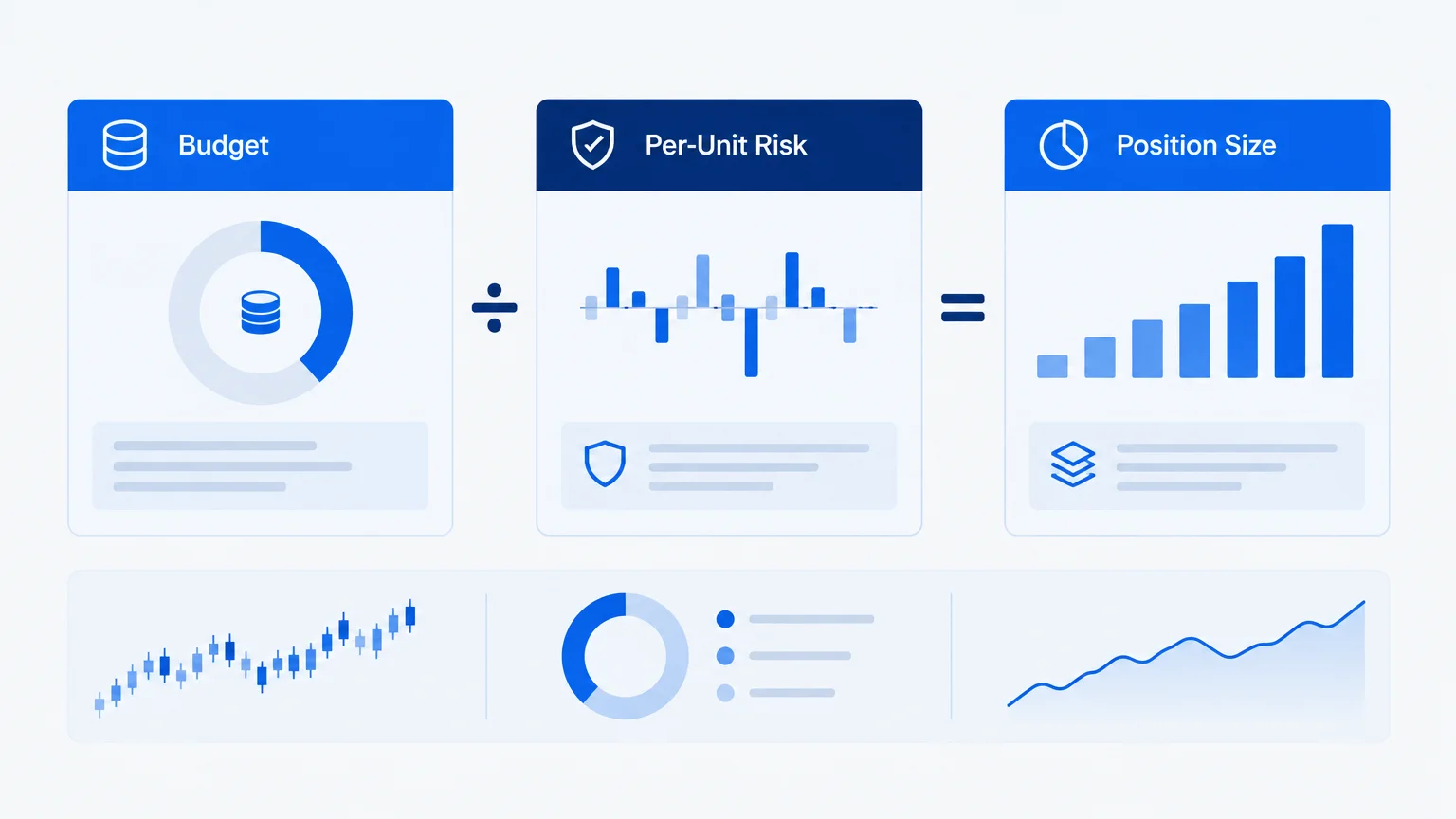
Position sizing translates a trading idea into monetary exposure. The same chart setup can produce very different consequences depending on the number of shares, units or contracts used. A position size calculator is useful only when its inputs match the actual instrument and execution assumptions.
The core sequence is straightforward: define a risk budget, identify the planned exit distance, convert that distance into cash risk per unit, then calculate a size that fits. The details become more demanding when contract multipliers, currency conversion and minimum increments are involved.
Choose a risk budget independently of the setup
The budget is the amount you are prepared to put at risk under the plan, not a prediction of the final loss. It may be expressed as cash or as a fraction of account equity, according to your own constraints and method. No single percentage is appropriate for everyone.
Avoid increasing the budget simply because a chart looks unusually convincing or an AI response uses a high-confidence label. Confidence does not change the product's multiplier or eliminate the possibility of worse execution.
Also consider total exposure. Several open positions can share the same economic driver. A per-trade budget is incomplete if the combined portfolio can be affected by one event.
Define a defensible exit distance
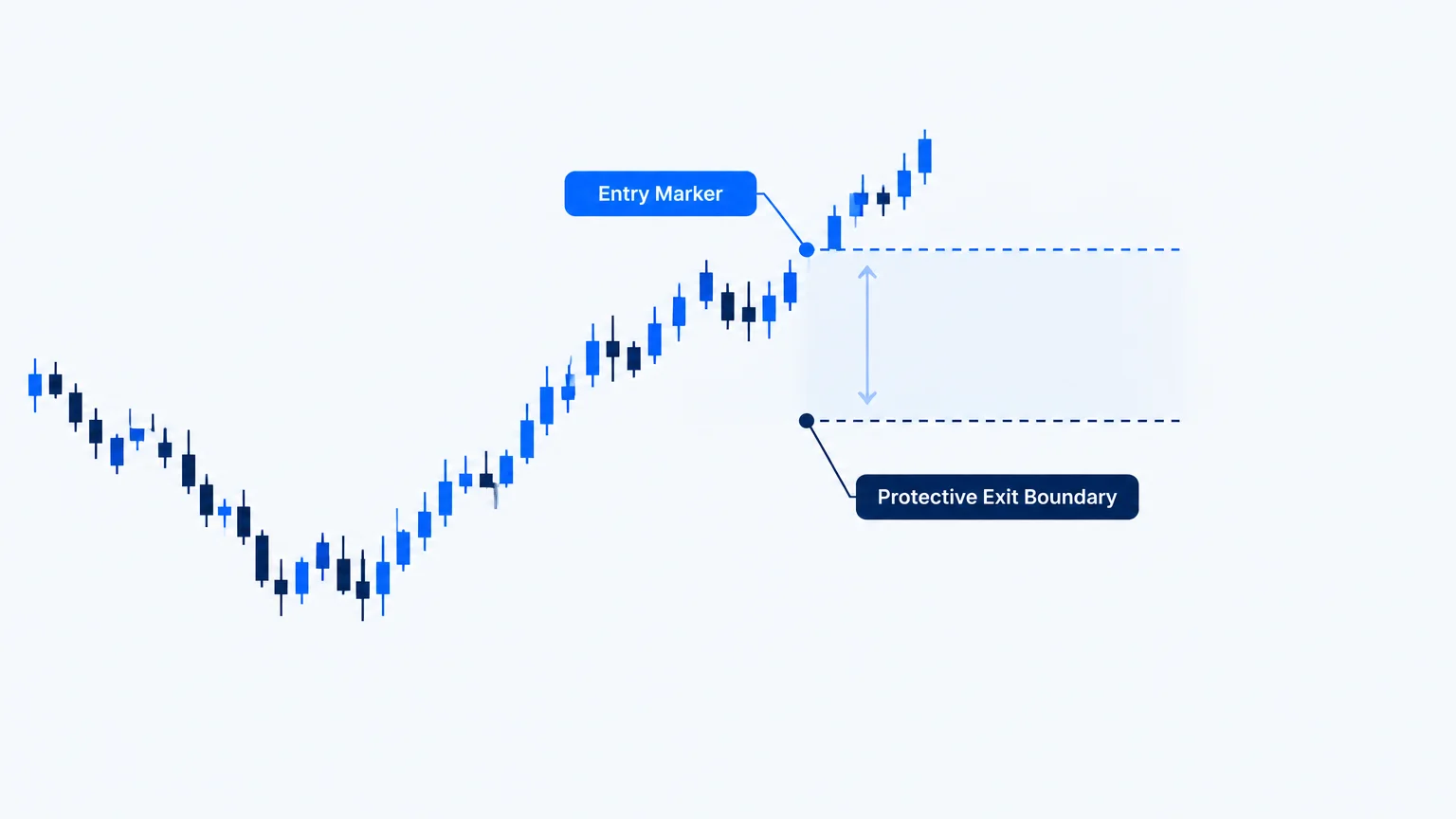
Identify the condition that would invalidate the setup, then determine how the exposure would be controlled. The invalidation-level guide explains why analytical failure and an executable stop are related but distinct.
Do not choose size first and force the stop closer to make the number fit. That reverses the planning sequence and can place the exit inside ordinary movement. If a valid distance produces an impractical size, rejecting the setup is a legitimate result.
Use the actual intended entry, not an earlier ideal price from the chart. A changed entry changes risk per unit even when the stop remains fixed.
Apply the basic formula
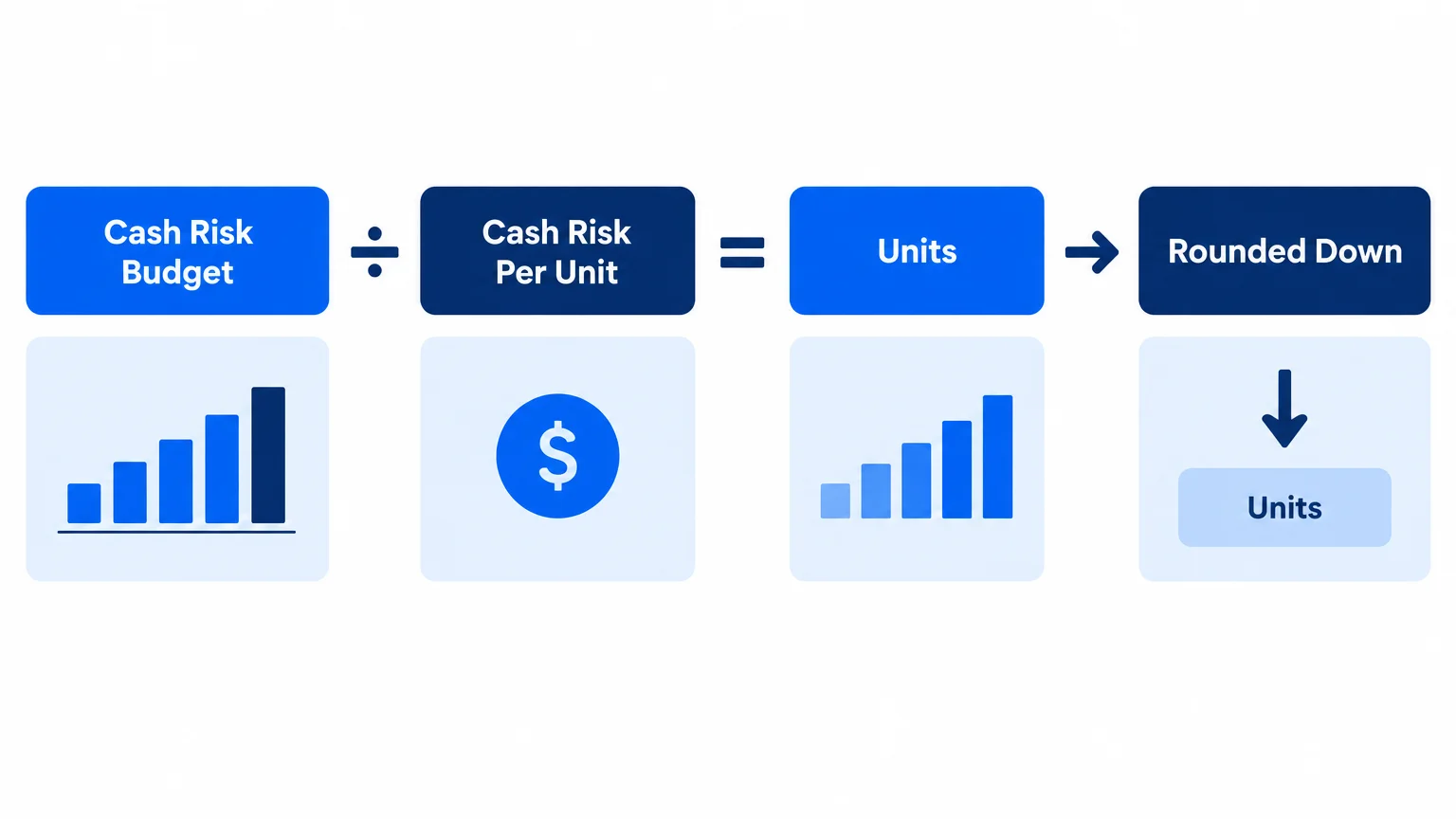
For a simple linear product, estimated size equals the cash risk budget divided by estimated cash risk per unit. For shares, the basic risk per share is the absolute distance between entry and planned exit, before costs and execution differences.
Suppose a hypothetical educational account allocates 100 units of currency to a planned risk. An illustrative entry is 50 and the planned exit is 48, giving 2 per share. Ignoring costs for the first calculation, the size is 50 shares.
If estimated costs add 0.10 per share, the risk estimate becomes 2.10 and the calculated size is about 47.6 shares. If only whole shares are permitted, rounding down gives 47 rather than rounding up beyond the budget. These are teaching values, not a recommendation about a real account.
Use the actual multiplier
For a contract with a fixed value per price unit, multiply the price distance by that value before dividing the risk budget. If using ticks, confirm the tick size and monetary value per tick. Do not mix a point distance with a tick value without converting the units.
Currency products may require conversion into the account currency. Gold products with similar symbols can have different contract sizes. The same displayed distance therefore does not imply the same cash exposure.
Check the broker or exchange specification and verify the calculator's interpretation of each input. A correct formula with the wrong multiplier produces a wrong answer.
Distinguish margin from risk
Margin is an amount required to support an exposure under the product's rules. It is not necessarily the maximum possible loss. A position that is affordable in margin terms can still be too large for the planned exit distance.
Likewise, notional value, cash committed and risk to a stop are different measures. Keep them separately labeled. A single number called “position value” can hide which concept the tool is reporting.
The risk/reward guide connects the planned loss and potential reward, but neither side should be confused with margin or buying power.
Include costs and stress the assumptions
Account for spread, commissions and other costs not already included in the entry and exit prices. Avoid double-counting a spread that is already represented by executable bid and ask values. If financing depends on holding time, state the assumed period.
Then examine a worse-execution case. What happens if the actual exit is beyond the planned level? The stop-loss guide explains why a stop does not fix the final loss at an exact amount.
Stress calculations are not forecasts. They help expose how sensitive the position is to an assumption that might fail during an event or liquidity change.
Respect minimum sizes and increments
A calculated fraction may not be tradable. Round according to the product's rules in a way that does not exceed the intended exposure. Check whether minimum commissions or other fixed costs materially change the estimate for a small position.
If the minimum permitted size is too large, the correct conclusion may be that the instrument does not fit the budget. Do not move the stop to an unsupported level simply to make the minimum size appear acceptable.
Recalculate after changing the entry, stop, account currency or contract. A saved calculator result is valid only for the inputs that produced it.
Use TradingInte's existing calculator carefully
Where available in your account, TradingInte's Risk Calculator can help organize the arithmetic. Enter verified values and confirm which market convention the tool expects. A calculator cannot determine whether the analytical stop is sensible or whether the trade is suitable for you.
Compare a first calculation with a manual example before relying on repeated use. If the result appears unexpectedly large or small, investigate units and specifications rather than assuming the tool knows the intended interpretation.
Review planned and realized exposure
After a trade, record the intended size, actual fill, costs and exit. Compare the realized loss or gain with the initial estimate. Differences may reveal a contract misunderstanding, execution issue or changed plan.
Keep the original risk reference when reviewing results. Recalculating it after the outcome can make performance appear more consistent than the original decisions were.
Check a calculator with boundary cases
Before using a new calculator repeatedly, test simple inputs whose results you can work out manually. Then test an invalid arrangement, such as a stop on the wrong side for the selected direction, and a distance of zero. The tool should handle those cases clearly rather than produce a plausible-looking size.
Also check rounding at the minimum permitted increment. A result displayed to many decimal places may exceed what the broker accepts. The final tradable size should be explicit, and the resulting estimated risk should be recalculated after rounding. This small validation exercise is more useful than trusting a tool solely because its normal example looks reasonable.
Key takeaways
- Size follows risk budget and defensible exit distance.
- Convert distance into cash using the actual specification.
- Keep margin, notional exposure and planned loss separate.
- Round to permitted increments without exceeding the budget.
- Recalculate whenever an input changes.
Frequently asked questions
What percentage of my account should I risk?
There is no universal figure suitable for every person or strategy. Your constraints, experience, portfolio exposure and ability to absorb losses matter. This guide explains the calculation rather than prescribing a personal budget.
Why does my calculator disagree with another tool?
Check contract size, pip or tick conventions, account currency, cost assumptions and rounding. Tools can use different definitions even when their input labels look similar.
Can the actual loss exceed the calculated risk?
Yes. Gaps, slippage, fees and changes to the position can produce a different result. The calculation is an estimate under stated assumptions, not a guaranteed maximum.
Should I increase size when AI confidence is high?
A confidence label alone is not a sound sizing input. Unless its meaning and validation are established, it does not quantify the probability of loss or justify changing the risk budget.
What if the calculated size is below the minimum?
The product may not fit the plan. Consider whether another permitted instrument or no trade is appropriate, rather than distorting the stop solely to meet the minimum size.
Conclusion
Position sizing makes the financial consequences of a chart idea explicit. Verify the units, define the assumptions and round conservatively within the plan. A useful calculator helps expose an unsuitable position as readily as it computes a tradable one.
Prepared with AI assistance
Keep exploring
 Risk Management
Stop Loss Explained: Define Risk Before Entering a Trade
Understand stop-loss planning, stop and stop-limit orders, execution uncertainty and the link between a defensible exit distance a...
Read article Risk Management
Take Profit Explained: TP1, TP2 and TP3 in a Trading Plan
Plan take-profit levels with clear reasons, calculate blended returns from partial exits and define what happens to exposure betwe...
Read article Risk Management
Risk/Reward Ratio in Trading: Calculate It and Use It
Calculate trading risk/reward using real entry assumptions, understand R multiples and break-even arithmetic, and account for cost...
Read article