Trading Entry Points: How to Identify a Better Entry Zone
Compare entry zones and confirmation triggers, define invalidation first and recalculate reward and risk when the actual entry differs from the plan.
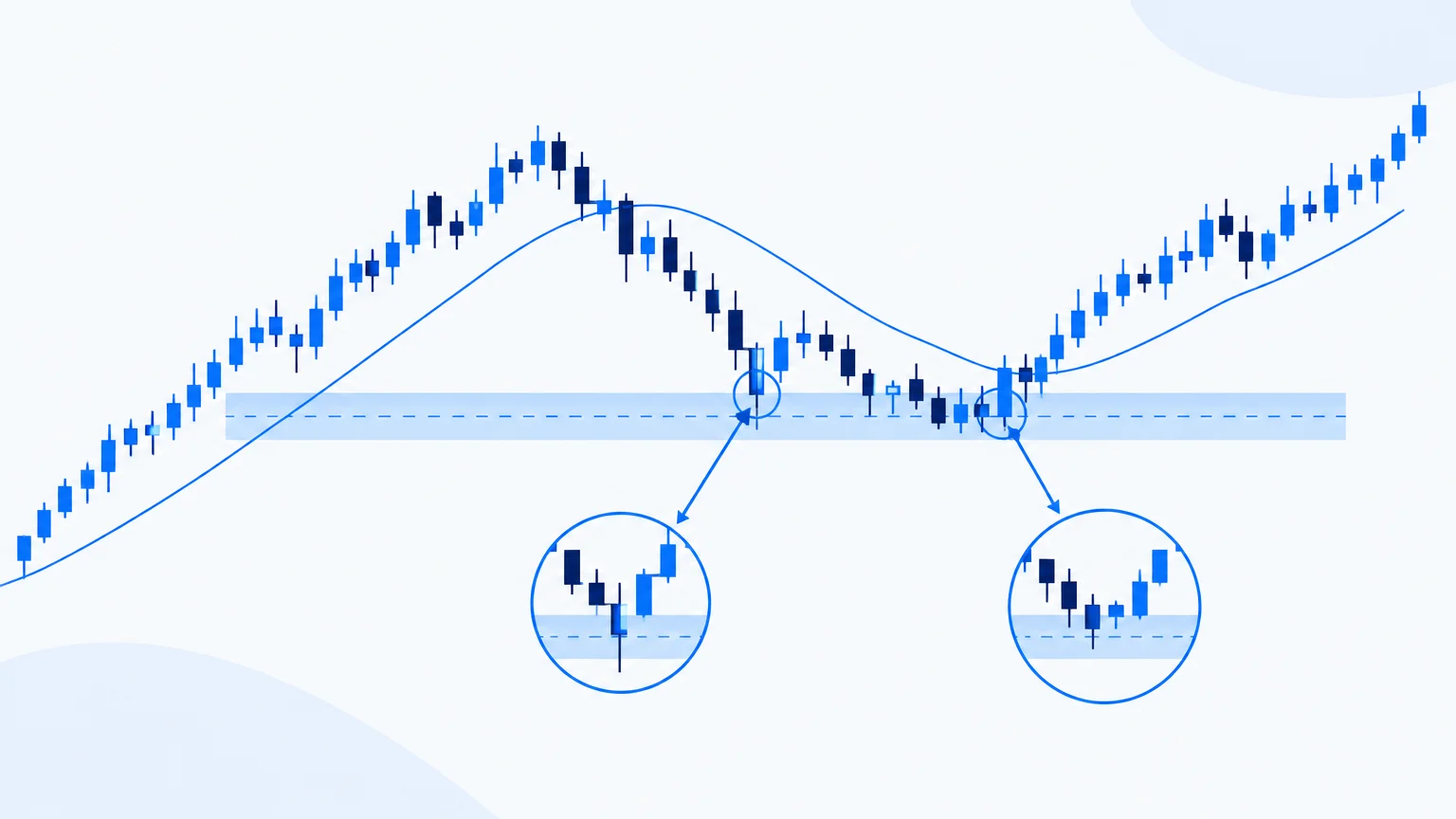
A trading entry point is where a plan becomes exposure. It is often better understood as an entry zone plus a condition, because a single attractive price says little about whether the market is behaving as the setup requires. The challenge is balancing location, evidence and the cost of waiting.
There is no universally best entry. A method that enters near a level accepts different uncertainty from one that waits for a completed break or retest. The useful question is whether the entry is consistent with the scenario and leaves sufficient room after risk and costs.
Separate location from trigger
Location describes where you are interested: a prior swing, a range edge or a pullback area. A trigger describes what must happen before considering participation. Combining them prevents every touch of a line from becoming an automatic order.
For example, a zone may be relevant because it was previously resistance. The trigger could require a defined rejection or acceptance after a retest. Without that second condition, the level is only a place to observe.
The support-and-resistance guide explains how to select meaningful areas and why they can fail.
Compare entry styles honestly
An anticipatory entry near a zone can offer a shorter distance to invalidation, but it may occur before the market provides evidence of a response. A confirmation entry waits for a condition, potentially reducing one kind of ambiguity while moving the price farther from the original reference.
A breakout entry participates in expansion beyond a boundary. A pullback entry waits for a return toward structure. Neither occurs reliably on demand; some moves never retest, while others break and fail.
Choose according to a defined method. Switching entry style after watching the latest candle can create a strategy that is impossible to evaluate consistently.
Define invalidation first
Before deciding that an entry is attractive, identify what would make the setup wrong. Then examine the distance between the actual entry and that condition. A stop chosen only to fit a desired position size may not describe the setup's failure point.
Read trading invalidation levels for the distinction between analytical failure and an executable risk-control order. They need to work together, but they are not identical concepts.
If a defensible invalidation leaves too much cash exposure at the smallest practical size, the setup may not fit the account or product. A convenient entry does not solve every sizing problem.
Measure the room to the next obstacle
Look at the nearest meaningful opposing area, not only an ambitious final objective. If the entry is immediately below resistance in an upward scenario, the available room may be limited even when the broader direction looks favorable.
The risk/reward guide shows why the actual entry must be used in the calculation. An earlier chart price is not still available merely because the analysis identified it correctly.
Include costs not already reflected in the quoted prices. Small distances can be materially affected by spread and fees. A visually neat setup may become unattractive after those details are included.
A hypothetical comparison
Imagine an educational long setup with invalidation at 96 and a plausible objective at 108. An entry at 100 creates a risk distance of 4 and potential reward of 8. Waiting until 103 while leaving the same invalidation and objective creates risk of 7 and reward of 5.
The later entry may have more visible confirmation, but the economics have changed. This does not prove the earlier entry is better; it shows that confirmation has a price. A method needs to evaluate both the chance of failure and the payoff structure rather than judging one in isolation.
These numbers are fictional teaching values. They are not a current stock quote or an instruction to place an order.
Distinguish an entry plan from an order type
A market order seeks execution under its terms, while a limit order restricts the acceptable price and may not fill. A conditional setup and an order instruction operate at different levels of the plan. Verify what your broker supports and how the product trades.
Do not assume a chart touch guarantees a fill. Order priority, spread, available size and the relevant quote can matter. Likewise, chasing a missed limit entry can create a different trade with different risk.
Write a rule for missed opportunities. If the method requires a particular zone and price leaves it, the correct action may be to wait for a new setup rather than improvise a late entry.
Add an event and liquidity filter
Before entry, check whether the intended holding period crosses a known event and whether current execution conditions match the assumptions. A narrow spread in an earlier screenshot does not establish the current cost.
If a setup depends on ordinary movement, sudden volatility can change both the trigger and the achievable exit. Decide in advance when the plan should be suspended or reassessed. Avoid tightening the stop simply to compensate for poor conditions without considering whether it remains structurally valid.
Control the urge to act
The emotional pressure to avoid missing a move can turn a watchlist into a sequence of chased entries. Write the zone, trigger and cancellation condition before price arrives. This makes it easier to distinguish a planned decision from a reaction to speed.
An AI explanation can amplify that pressure if it sounds certain. Ask the tool for reasons to wait and for the conditions that would make the entry unattractive. TradingInte can organize those questions, but it does not require a trade whenever it identifies a scenario.
Review entries using the original information
Save the chart and intended entry rule. Later, compare the actual decision with the plan. Did the trigger occur? Was the price inside the permitted area? Did the invalidation or objective change after entry?
Do not judge the entry solely by whether a later better price appeared. A review should evaluate the rule using information available at the time. Otherwise, every trade can be criticized for not selecting a future turning point that was unknowable beforehand.
The chart-analysis workflow provides a broader structure for this review, including cases where no trade was taken.
Define a cancellation condition for pending ideas
A watchlist entry can expire before any order is placed. Price may reach the intended objective without providing the trigger, a relevant event may change the context, or the invalidation may occur first. State those cancellation conditions alongside the entry rule.
This avoids taking a late version of a setup whose original opportunity has already passed. When canceled, archive the idea and require a fresh scenario before considering it again. The discipline is useful even when no money was at risk, because it keeps research from turning into an indefinite commitment to one direction.
Key takeaways
- Define an entry zone and a trigger separately.
- Evaluate the trade-off between early location and later evidence.
- Use a defensible invalidation before choosing size.
- Recalculate when the actual entry changes.
- Keep a written rule for missed opportunities.
Frequently asked questions
Is the lowest possible entry always best for a long trade?
No. A lower price can come with weaker evidence or a failed scenario. Entry quality depends on the method, invalidation and available reward, not simply on buying below an earlier quote.
Should I wait for confirmation every time?
Only if the strategy defines what confirmation means and accounts for its timing cost. Waiting can improve clarity while reducing the available reward or causing the opportunity to pass.
What if price misses my limit by a small amount?
Follow the rule for missed entries. Chasing creates a new set of distances and costs that needs reassessment. A near miss does not obligate the market to return or justify abandoning the plan.
Can AI identify an exact entry price?
It can propose a level from supplied information, but precision is not proof of quality. Verify the source, current conditions and relation to invalidation before using it in a calculation.
Is waiting a valid trading decision?
Yes. If location, evidence and risk do not align, waiting preserves the integrity of the method. A process that always produces an entry may be ignoring important constraints.
Conclusion
A better entry is one that fits a complete plan. Define the location, wait for the method's condition and recalculate the real opportunity. The ability to let an unattractive entry pass is part of disciplined analysis.
Prepared with AI assistance
Keep exploring
 Technical Analysis
Trading Chart Analysis: A Practical Decision-Making Guide
Build a repeatable chart analysis process using market structure, meaningful levels, conditional scenarios and realistic risk and...
Read article Technical Analysis
Support and Resistance: Finding Important Price Levels
Identify meaningful support and resistance zones, assess how price responds and define failure conditions without treating chart l...
Read article Technical Analysis
Market Structure in Trading: Trends, Breakouts and Reversals
Read market structure through swings, trends, ranges and transitions. Define confirmation, invalidation and timeframe without rely...
Read article